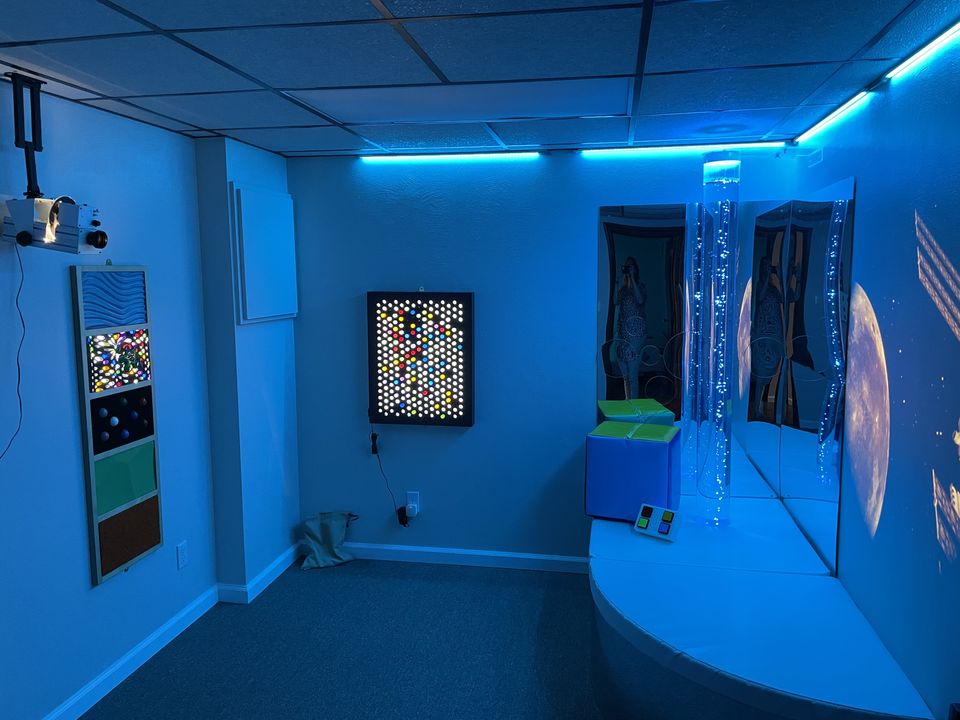
This is the fourth instalment of our discussion of the work of by Dr. Katy Unwin, Dr. Georgina Powell and Dr. Catherine Jones of the Wales Autism Research Centre, School of Psychology, Cardiff University.
The researchers conducted interviews with ten practitioners. They identified six themes reflecting beliefs about Sensory Room (SR) use with autistic children.
These were
- SRs benefit behaviour, attention and mood.
- SRs have distinct properties that facilitate benefits
- The use of the SR should be centred on the child’s needs
- They are most effective when the practitioner plays an active role
- They can be used for teaching and learning.
- However, they can present challenges.
Our first three instalments summarised the findings in themes 1,2 and 3 (see TFH Sensory Rooms Blogs). This part will consider theme 4.
Sensory Rooms are most effective when the practitioner plays an active role
An active practitioner was believed to be the key to achieving positive outcomes for autistic children within the SR. This theme linked heavily with the “SR use should be centred on the child’s needs’ theme” (see part 3) as an active practitioner was deemed necessary to understand the child’s needs and adapt SR use accordingly. Some practitioners stated that one-to-one interactions within the SR were qualitatively better than those in other settings because the child’s sensory needs were met. However, others highlighted the importance of the practitioner over the Sensory Room, “It might not necessarily be the room, it’s the close relationship and working one-to-one”.
TFH emphasise that practitioners need to become familiar with the sensory room equipment. This familiarity should be obtained within the room without a child being present. It is best obtained in conjunction with another practitioner, perhaps a more experienced one, but also by experimentation. Equipment is robust and versatile. Children are encouraged to play with it; so should the practitioner. Familiarity breeds not contempt but confidence.
Citations:
Katy L. Unwin, Georgina Powell, Catherine R.G. Jones, A sequential mixed-methods approach to exploring the experiences of practitioners who have worked in multi-sensory environments with autistic children, Research in Developmental Disabilities, Volume 118, 2021, 104061, ISSN 0891-4222, https://doi.org/10.1016/j.ridd.2021.104061.
(https://www.sciencedirect.com/science/article/pii/S0891422221002109)
TFH, and indeed everyone working in the Sensory Room field, would welcome any comments arising from this article. If you have conducted or know of any research or observations on behaviour please let us know: John.t@tfhuk.com and we will post it.
Keep reading
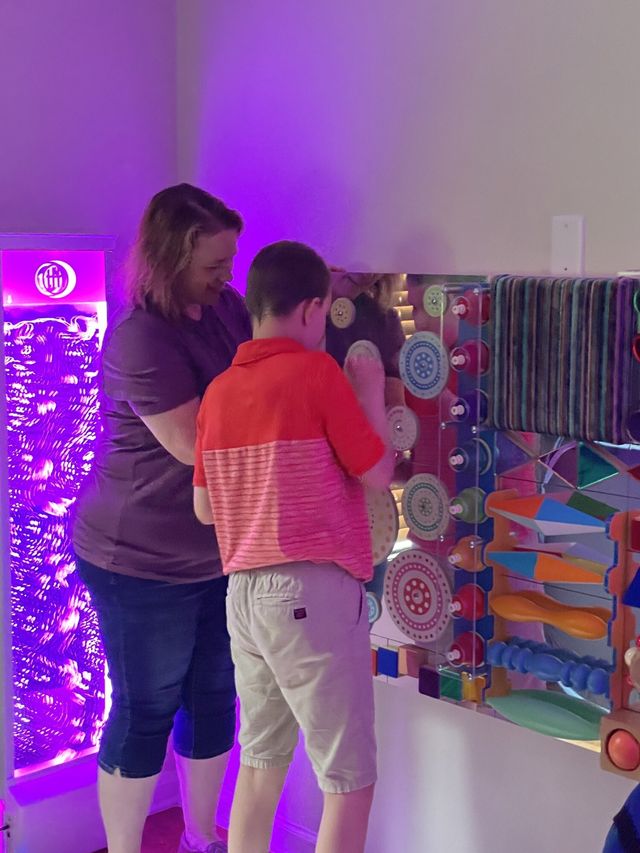
The experience of practitioners who have worked with autistic children in Sensory Rooms. Part 5
practitioners described the SR Room as an effective teaching and learning environment and some considered this its main purpose.
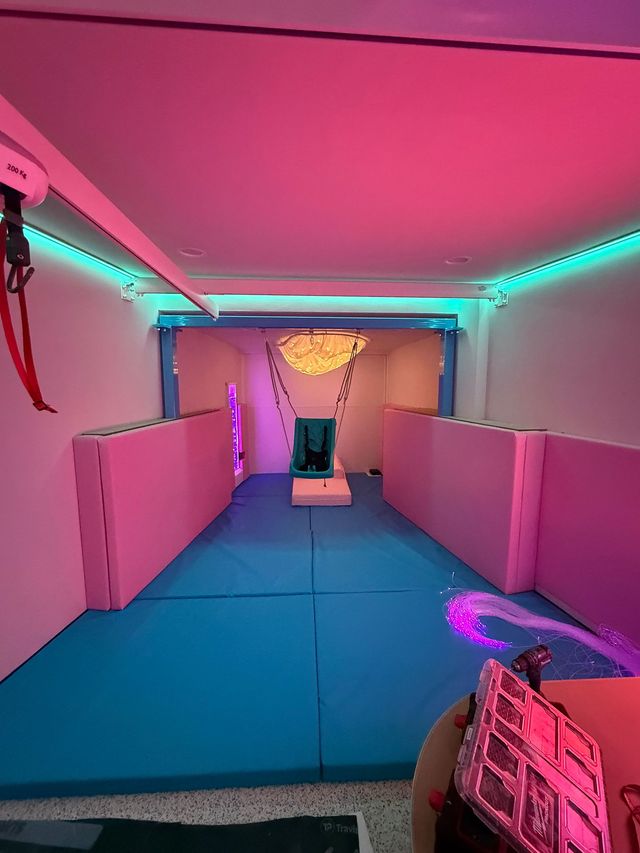
The experience of practitioners who have worked with autistic children in Sensory Rooms. Part 3
This is the third instalment of our discussion of the work of by Dr. Katy Unwin, Dr. Georgina Powell and Dr. Catherine J...
The most sophisticated, radical, powerful gift
Max Porter claims that: Play is the most sophisticated, radical, powerful gift.