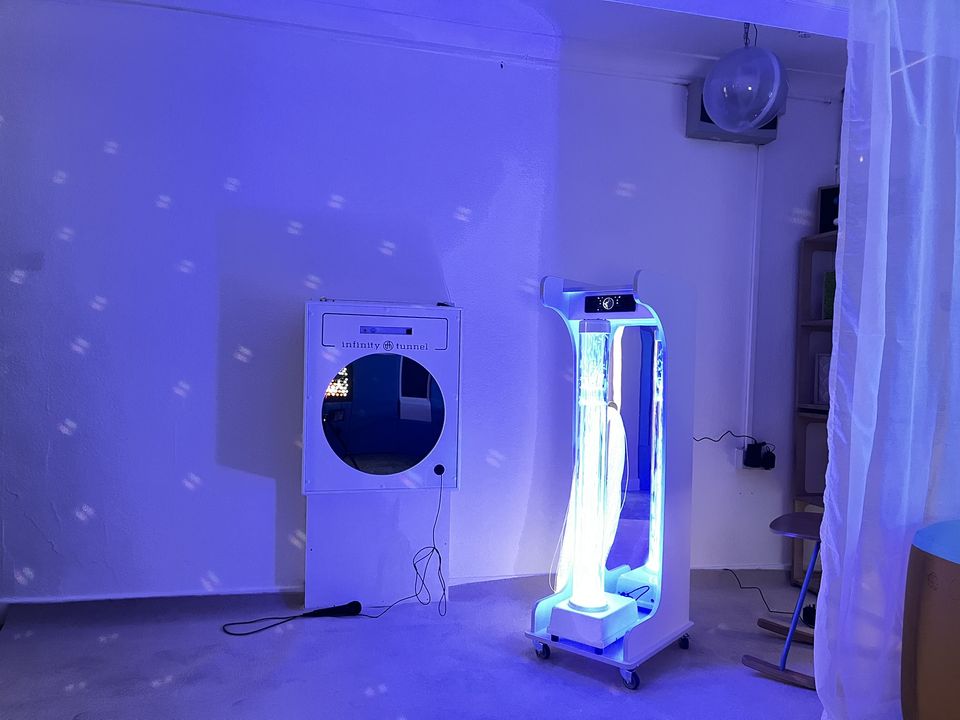
We are often told, “We’d love to have a sensory room but frankly we haven’t got the space.”
Actually, you need surprisingly little, and moreover it doesn’t have to be a dedicated area.
Perhaps you have the end of a corridor or a room that isn’t in constant use. You can’t develop a permanent sensory room, but you can have most of the advantages by using the
Vecta. The original idea came from talking to hospitals. Hospitals like the idea of a sensory room, but the logistics can be a nightmare. The patient would have to be moved from her bed to a trolley, wheeled along corridors, possibly into a lift, and finally into a sensory room. By the time the return journey has been completed, many of the effects of the room would be forgotten. It was not, as I am sure you can imagine, a procedure that endeared itself to the hospital team.
To deal with the problem, TFH designed the Vecta, the world’s first mobile sensory room. Instead of moving the patient to the room, the room is moved to the patient.
Although the original intention was that the Vecta would be a bedside experience for an individual patient, it was soon discovered that by darkening the entire ward, everyone, including the ward sister, enjoyed the experience. We know of some hospitals where there is a dedicated Vecta for individual wards.
Quite quickly, the concept was found to work in other environments, because all you need is a plug and hey presto you have a lovely little sensory area. Then, when you need the space for some other activity, the Vecta can be unplugged and popped back in its cupboard. We have three different models to suit all budgets.
Keep reading

Designing a Sensory Space Around Students with Visual Impairments
How TFH partnered with Western Pennsylvania School for Blind Children to create a sensory environment built around the individual needs of its students.
All shook up, vibration in the sensory room
Many years ago, I visited the DeHartenburg Institute in the Netherlands, the birthplace of Snoezelen, the original senso...

Projectors in the Sensory Room – a new development
Ever since the birth of the sensory room, the projector has been at the heart of the installation. In many ways, it sets...