Here we go again, winter begins to soften and gives way to spring, another season, another transition—But this one feels both refreshing and unpredictable. Snow melts, routines shift, sun stays out longer, and each day brings something new. While spring invites fresh air, outdoor play, and new opportunities, the path there isn’t always a straight line.
Some days feel like spring has arrived… and others remind us winter isn’t quite done.
With time and patience, we know—change always comes.
For many individuals, especially those who are neurodiverse, seasonal transitions can bring more than just a change in weather. They can introduce new sensory experiences, altered routines, and unfamiliar expectations. From switching into new shoes, to navigating different environments, to revisiting places more frequently—these changes can feel significant.
Even small shifts can have a big impact.
At camp, in classrooms, and at home, we often see how the right supports can ease these transitions in meaningful ways. Familiar, trusted tools can provide consistency and comfort when the world feels like it’s shifting.
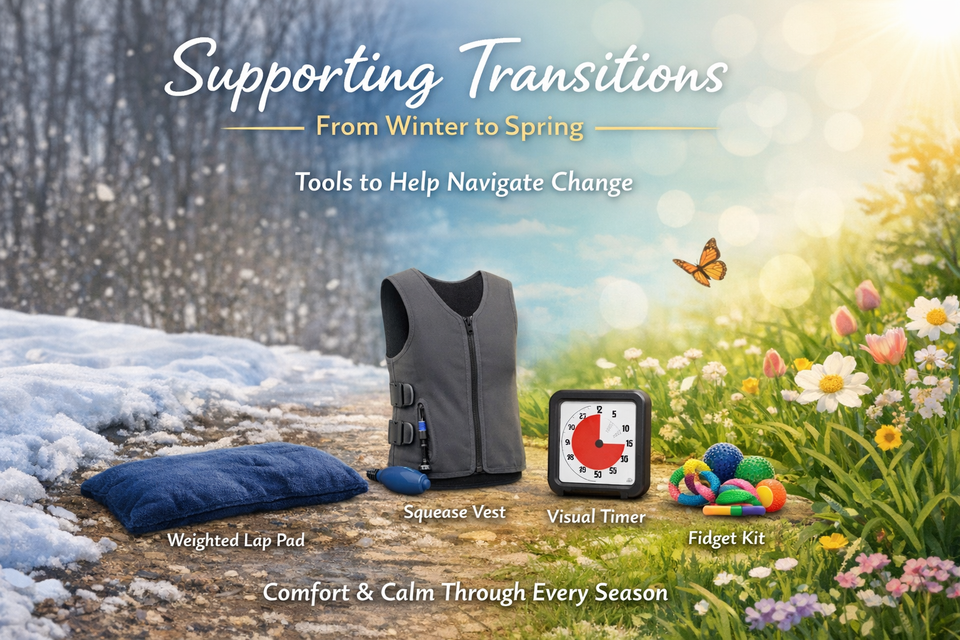
Simple, supportive solutions like a weighted lap pad can offer calming deep pressure during moments of adjustment. A Squease vest or machine can help regulate sensory input, creating a sense of grounded calm. Visual timers can make transitions more predictable, helping individuals prepare for what’s next. And fidget kits provide a quiet, reliable outlet for focus and self-regulation.
These tools don’t remove change—but they can make it feel more manageable.
Transitions take time. Allowing space to move through change at a comfortable pace, supported by familiar strategies and tools, can make all the difference. It’s not about rushing the process—it’s about supporting it.
Because even a small sense of stability can go a long way.
As we step into spring, we embrace the newness it brings—longer days, new activities, and more opportunities to explore. And with the right supports in place, those transitions can feel a little smoother, a little calmer, and a lot more empowering.